Overview
Giving an industrial AI engine a product people can actually use
Democritus sits on top of the systems a project already runs on and reads them in place, with nothing copied into a warehouse. The engine worked when we arrived. Everything a person would touch still had to be built.
Multiple
Customers signed following a POC
$250k+
Average contract value
“Exceptional work by Likitha and her team. In industrial AI, few designers bridge technical complexity with simple design, and she did exactly that. She grasped our domain constraints quickly and delivered high-quality branding and product design on time. If you're building something complex, hire her.”
 Swaroop GururajCEO, Democritus AI
About the project
A query engine that worked and almost nothing around it. No design system, no real product, and a company still in stealth without a website.
Project-controls teams reportedly spend about 70% of their time checking the same numbers across Excel, Primavera, SAP and a WhatsApp thread. By the time someone decides anything, the numbers behind it can be a month old. That is as much an interface problem as an engineering one.
- Services
- Branding, Product Design, Web
- Industry
- Industrial and capital projects
- Engagement
- 12-week sprint, six months in total
- Period
- October 2025 to April 2026
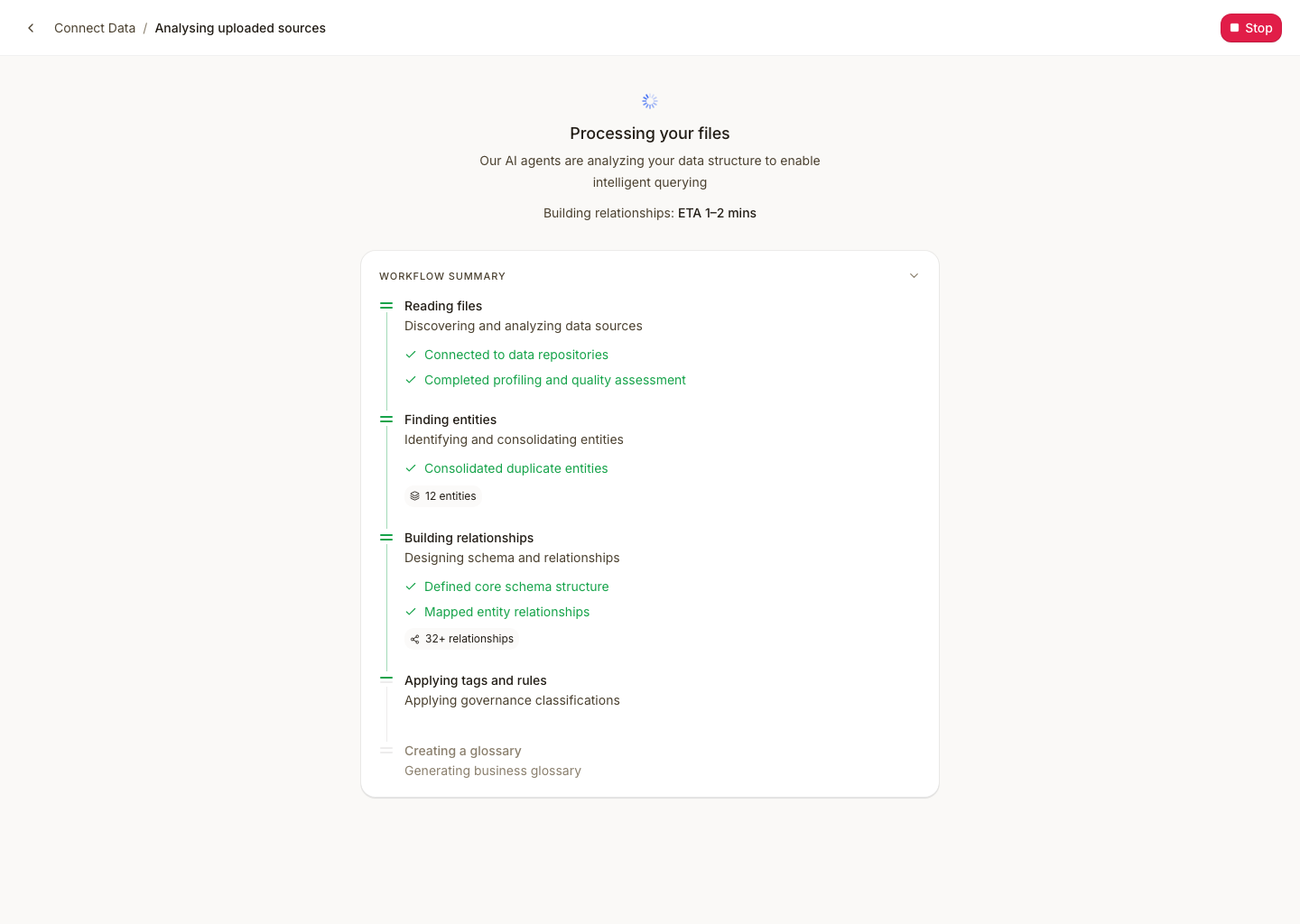
1 / 6 · Processing
What we solved
We started with the industry rather than the screens. What a project controller actually does in a week, where their numbers come from, which of them anyone trusts, and what would make Democritus stand out against the tools these teams already have.
One thing everyone agreed on early: it had to be beautiful. Nothing in this category is. These teams work all day in software built in the 2000s that still looks it, so modern and smooth is not decoration here — it is the first sign that this is not more of the same. The brand came out of that. Warm neutrals, Inter after trying three other typefaces, and lime used rarely enough that it still means something when it turns up. The buttons have some weight to them for the same reason.
Then the product, screen by screen. Two decisions did most of the work. We moved access control to after validation instead of before it — there is no point setting rules on data nobody has checked yet. And we cut the idea of a separate "project" completely, because Primavera already owns that word for these users and two meanings for it made every dashboard harder to read.
Agents that say what they need
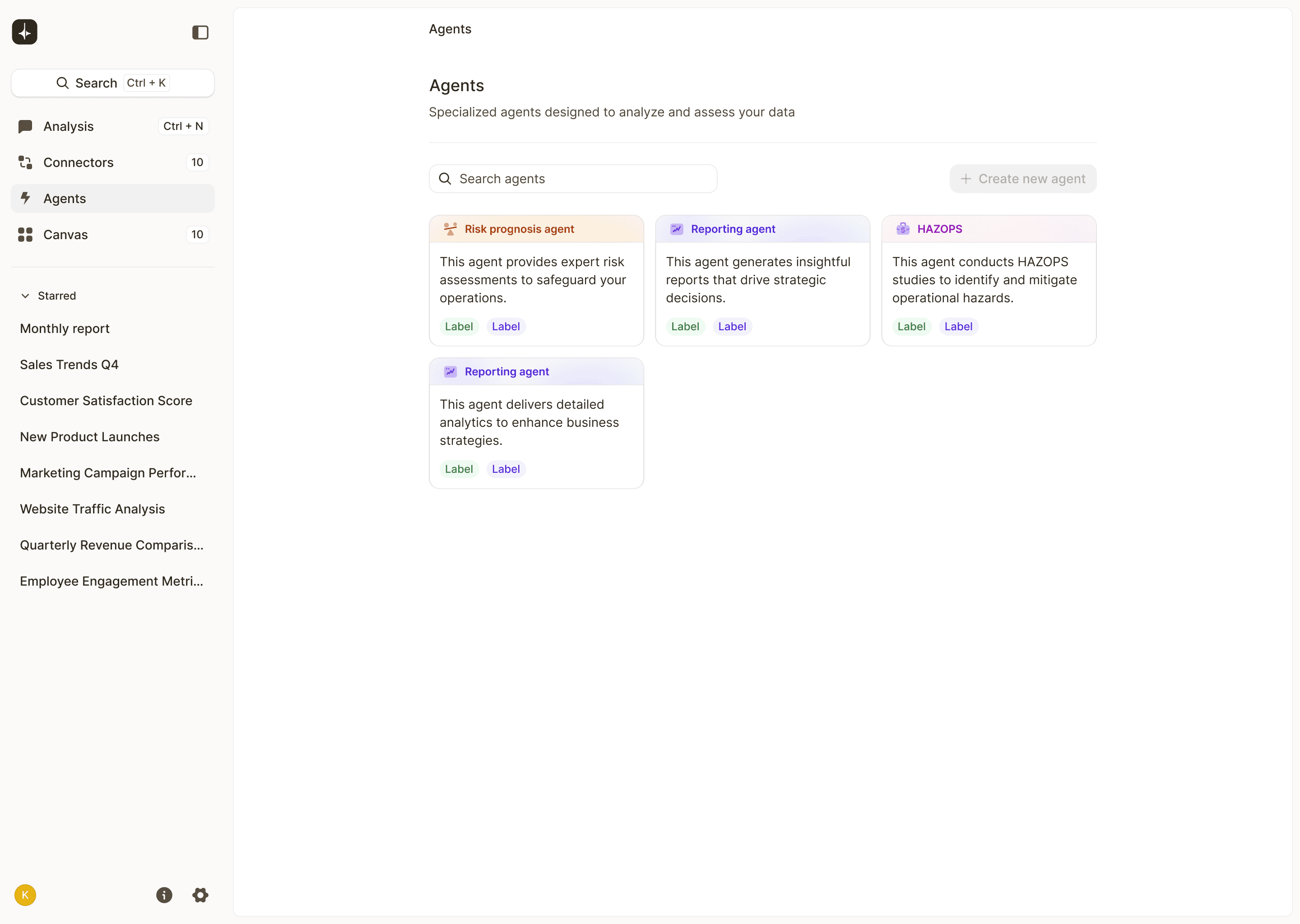
An agent is only useful if you can tell what it will do before it does it. Each one is a card with a plain description — risk prognosis, reporting, HAZOPS — rather than a name you have to already know.
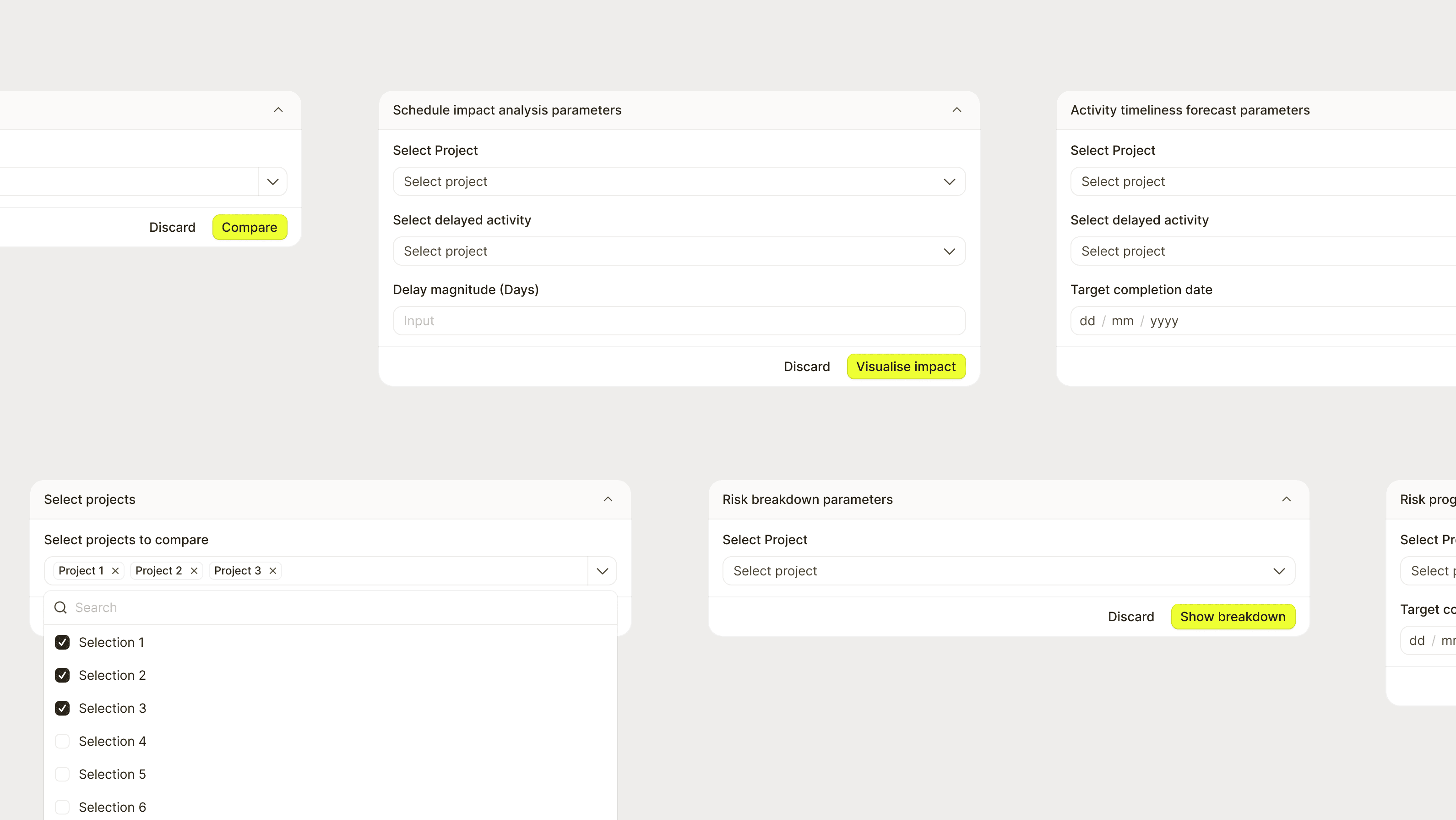
Running one asks for exactly what it needs and nothing else. A schedule impact analysis wants a project, the delayed activity and how many days; a timeliness forecast wants a target date instead. Same shape every time, so the parameters change but the pattern does not.
Who can see which rows
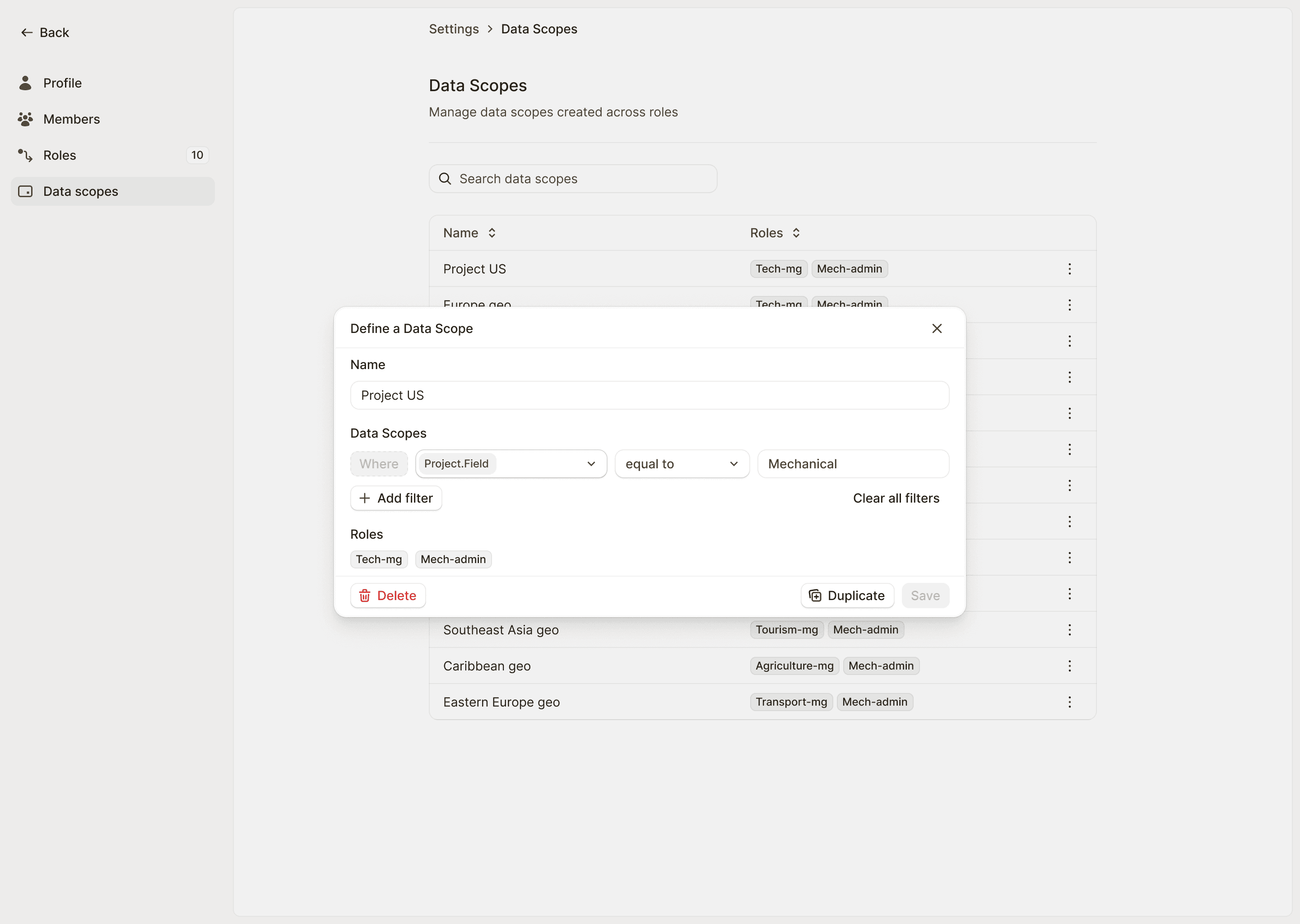
In industrial work, access is not per screen, it is per row. A contractor on the US mechanical scope should see those projects and nothing else, and that has to hold whatever question they ask the AI.
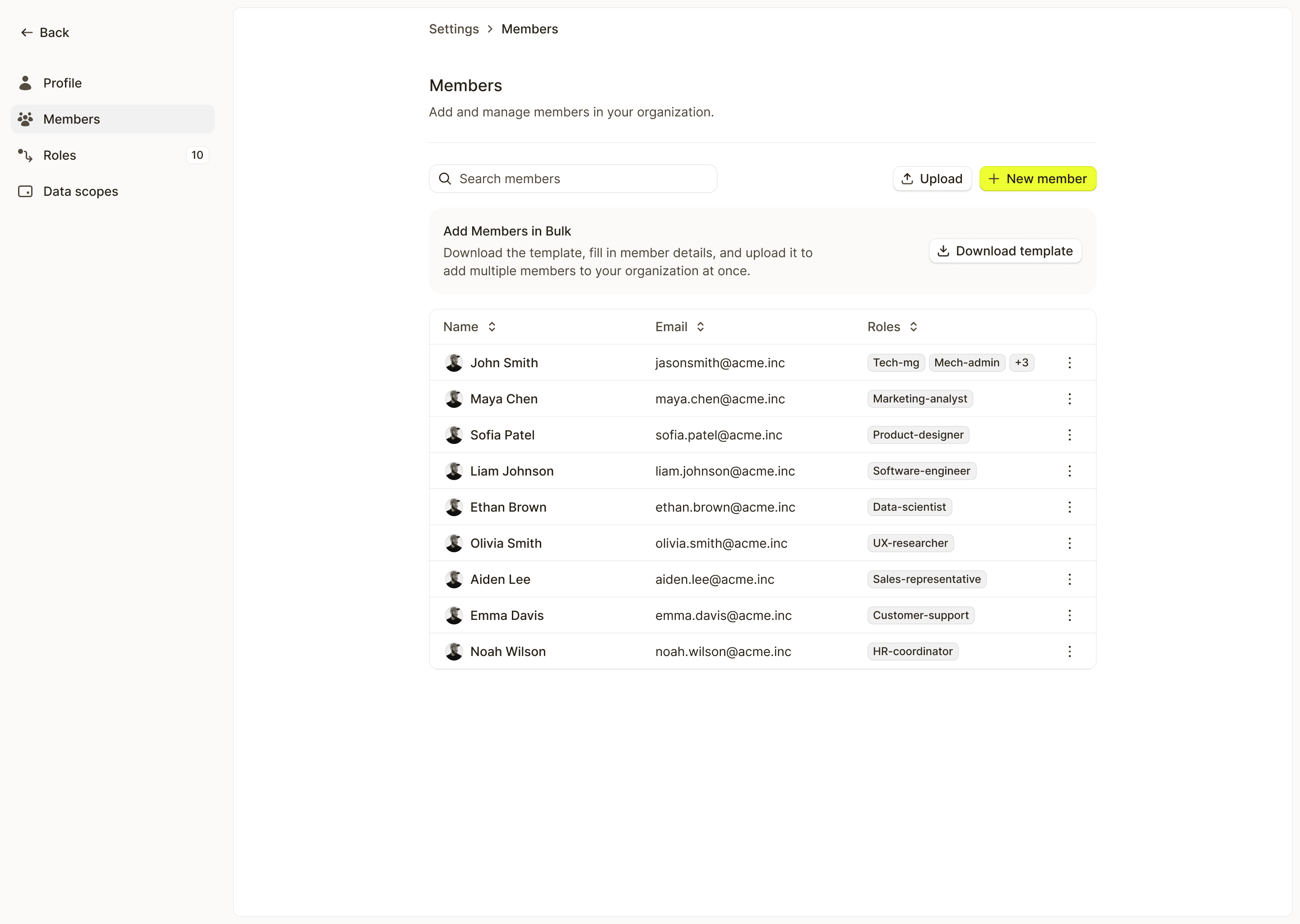
So a data scope is a filter, written once and attached to roles: where Project.Field equals Mechanical. Members get roles, roles carry scopes, and the same rule applies whether someone opens a table or asks a question in chat. This is the piece we moved after validation — there is no sense writing rules against data nobody has checked yet.
Where we stand now
The MVP demo went out in March 2026 and the site went live with the announcement. Democritus has since incorporated in India and the US.
We are still on it, designing roadmap work as it comes up.
What we built
Six-stage ingestion
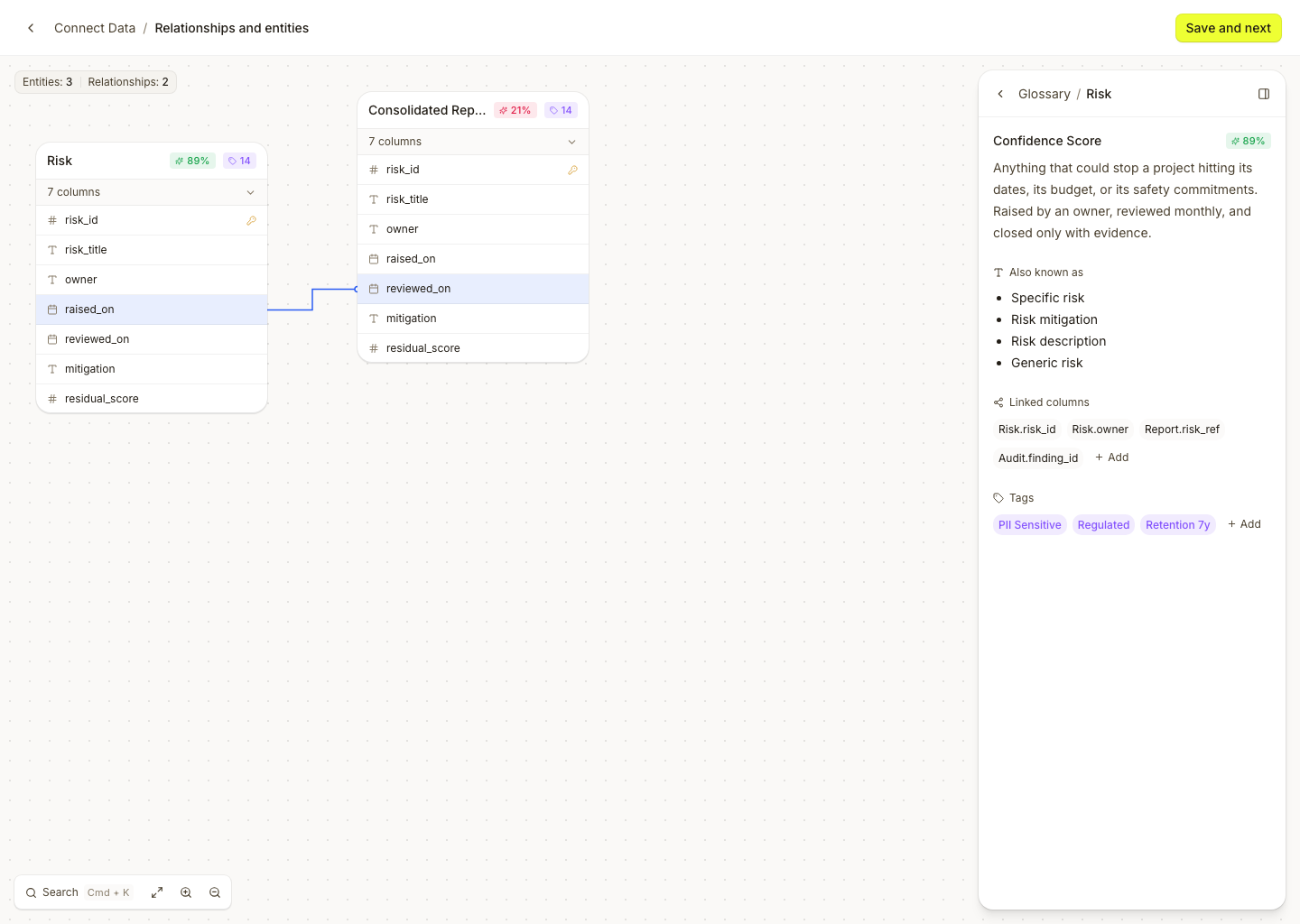
Profiler, Aligner, Architect, Tagger, Glossary, Context. It works out the schema and what the data means, then asks a person to check it before anything goes live.
Analysis and Canvas
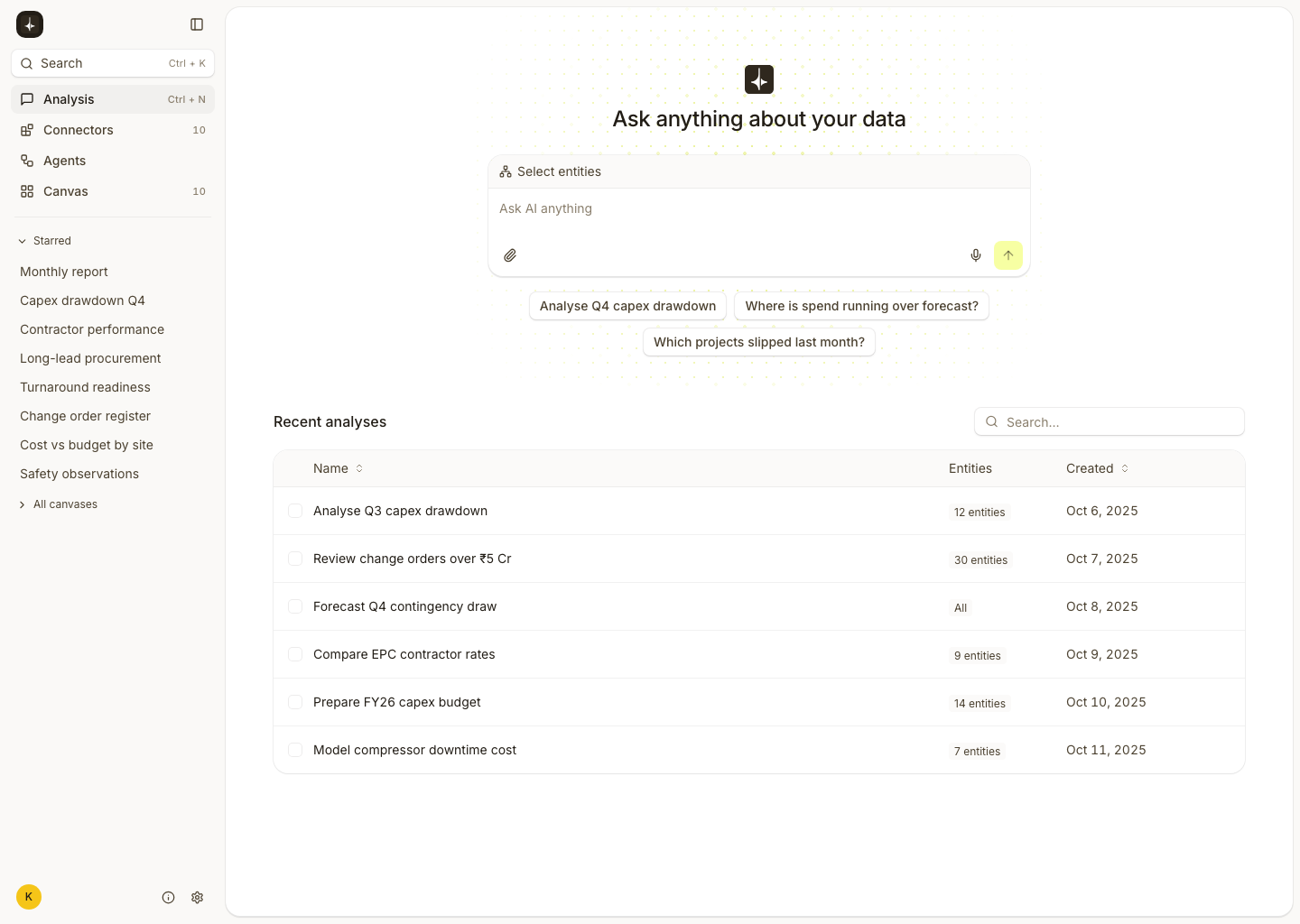
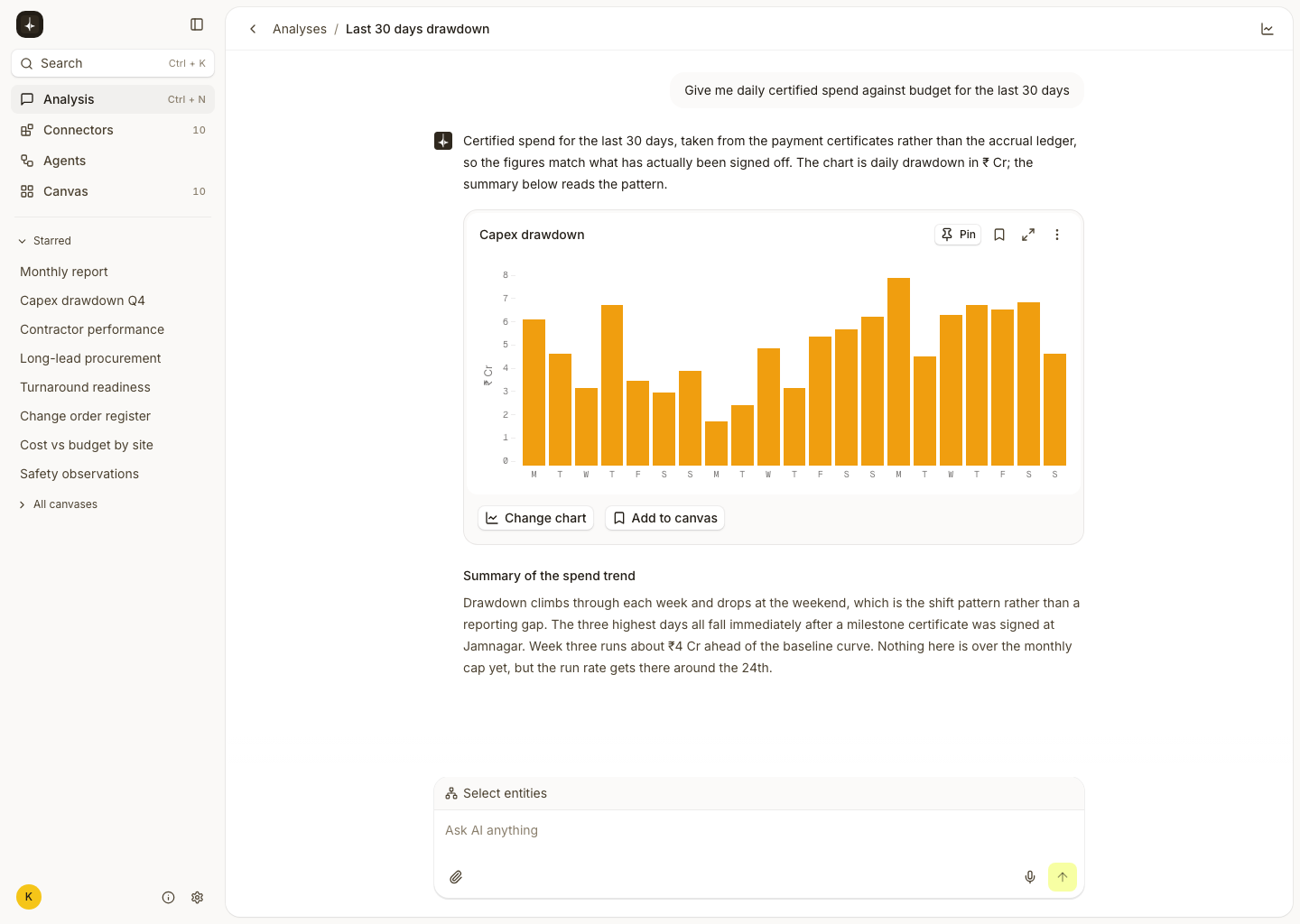
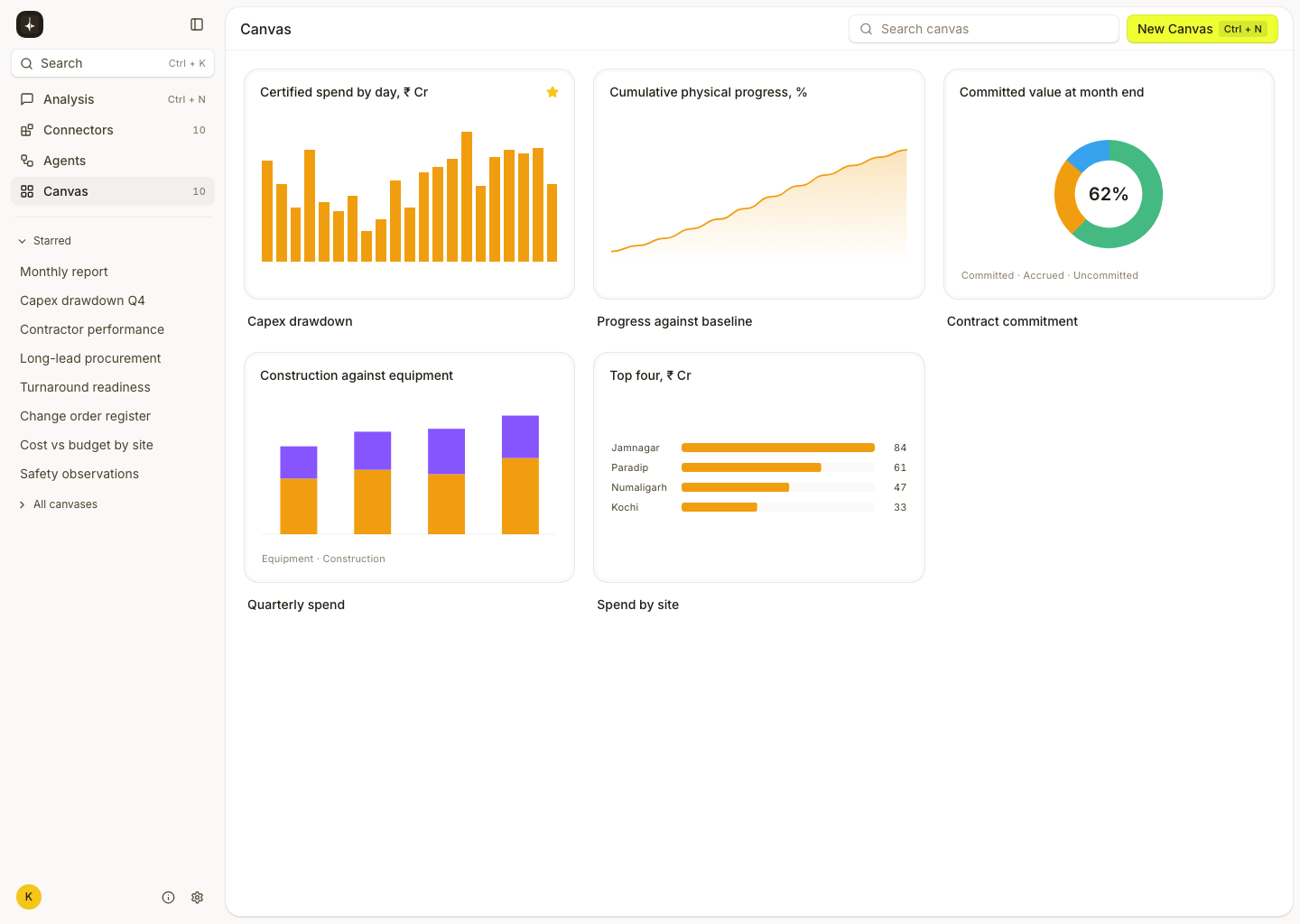
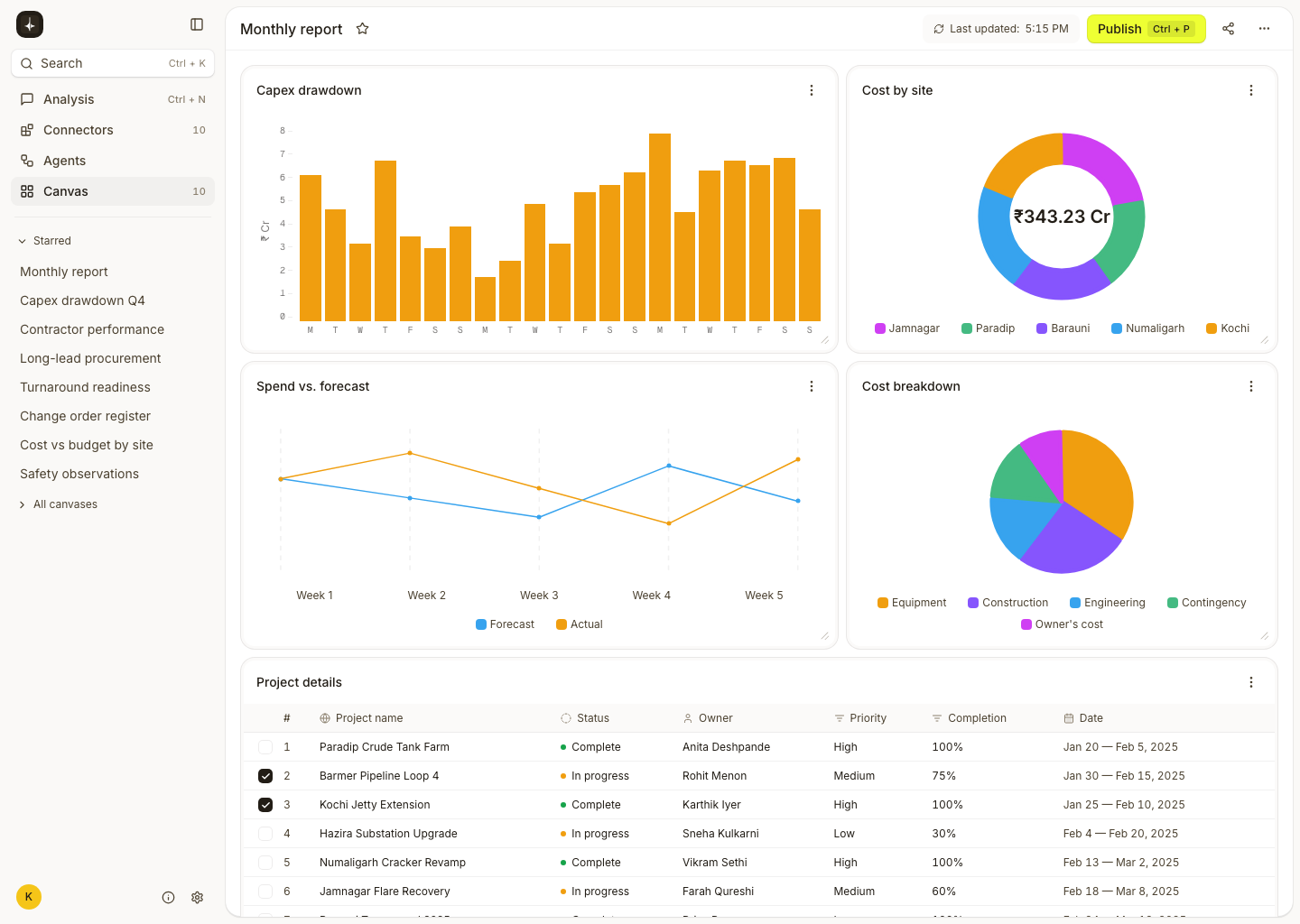
Ask in chat, pin what is useful to a shared Canvas. Changing a chart makes a new version instead of overwriting the old one, so you can always see where an answer came from.
Reasoning panel
The answer, the steps behind it, and sources you can click, in a panel beside the data rather than on top of it. Nobody signs off on a number they cannot trace.
Relationship Inspector
Opens from the arrow between two tables and shows why the system thinks they are related, with sample rows to back it up.